Audio By Carbonatix The Ghana Chamber of Mines has challenged claims by the Chief Executive Officer of the Ghana Gold Board (GoldBod), Sammy Gyamfi, that large-scale mining companies repatriate less than 20% of their mineral export proceeds to Ghana. In a statement responding to remarks made at a ceremony marking the sale of the Damang Gold Mine’s first gold output to the Bank of Ghana through GoldBod, the Chamber described the figure as “materially misleading”. Speaking at the event, Mr Gyamfi contrasted the foreign exchange contribution of artisanal and small-scale mining (ASM) with that of the large-scale mining sector. “But in sharp contrast to that, the large-scale mining companies in the country only sold just about 10% of their output, just about 10 tons of the almost 100 metric tons of gold they produced in 2025,” he said. “If you add the physical gold stocks they sold to the country through the Bank of Ghana to the foreign exchange they repatriated back, you will not get more than 20%.” Mr Gyamfi argued that although large-scale mining firms produced nearly $10 billion worth of gold in 2025, Ghana retained only a small portion of the value generated because many multinational mining firms are allowed under existing agreements to keep a substantial share of export proceeds abroad. “And the agreements they’ve signed with the Republic allows them to retain, in some cases, 100% of the proceeds of their gold sales outside Ghana. In some cases, 80% retention, 90% retention. So what comes back into the economy is very little,” he stated. The Chamber of Mines, however, said the calculation used by the GoldBod CEO captures only transactions conducted directly with the Bank of Ghana and ignores significant inflows channelled through commercial banks operating in the country. “The cited statistic is derived solely from bullion gold and foreign exchange sold directly to the Bank of Ghana,” the Chamber said. “This approach captures only one channel of forex repatriation and excludes substantial inflows through the commercial banking system.” The Chamber explained that mining companies repatriate export earnings through two recognised channels: direct sales of foreign exchange and bullion gold to the Bank of Ghana, and transfers through commercial banks domiciled in Ghana. It argued that any accurate assessment of the mining sector’s foreign exchange contribution must account for both channels. According to the Chamber, a significant portion of export proceeds repatriated through commercial banks is used to meet local obligations, including royalty payments to the government, utility payments, fuel purchases, employee salaries, payments to local suppliers, and corporate social investments in mining communities. Some of the foreign currency brought into the country is also converted into Ghana cedis, which the Chamber says supports domestic foreign exchange liquidity and exchange rate stability. “Based on industry data, approximately 70 per cent of mineral export proceeds from the Chamber’s producing members is returned to Ghana through a combination of the central bank and commercial banking channels,” the statement said. The Chamber further distinguished between “gross forex repatriation” — the total amount of foreign exchange returned to Ghana — and “net forex retention”, which refers to the balance remaining after companies settle external obligations. It maintained that gross repatriation is the appropriate measure when assessing the mining sector’s contribution to Ghana’s foreign exchange position, in line with balance-of-payments accounting principles. The statement also referenced a previous Bank of Ghana policy that granted the central bank a right of first refusal on foreign exchange intended for sale to commercial banks, arguing that the policy itself acknowledged the importance of the commercial banking channel in forex inflows. The Chamber called for the publication of “a disaggregated and transparent account” of mineral sector foreign exchange flows through both the central bank and commercial banks to improve public understanding and policy discussions. The disagreement highlights ongoing debates over how much value Ghana retains from its mineral resources, particularly at a time when the government is pursuing reforms aimed at strengthening foreign exchange reserves and increasing local benefits from gold production. DISCLAIMER: The Views, Comments, Opinions, Contributions and Statements made by Readers and Contributors on this platform do not necessarily represent the views or policy of Multimedia Group Limited. Tags: Gold Goldbod Ken Ashigbey Mining Sammy Gyamfi DISCLAIMER: The Views, Comments, Opinions, Contributions and Statements made by Readers and Contributors on this platform do not necessarily represent the views or policy of Multimedia Group Limited. Related to this story The Bank of Ghana has not made any losses that should be a topic for discussion — Sammy Gyamfi May Day: Lands and Mines Watch Ghana demands safer conditions, fair wages for workers We need to restructure Ghana’s gold transactions – Dr Atuahene Police probe multi-million dollar gold transaction dispute E&P’s gold sale vindicates Damang bid – Sammy Gyamfi E&P’s 100% gold sale to GoldBod sets benchmark — Legal Rep Damang Mine sells 100% of first gold output to GoldBod, BoG in historic move GoldBod triples revenue, cuts spending and generates operational surplus of GH₵909.8m for 2025 Actor Boris Kodjoe engages GoldBod CEO Sammy Gyamfi on value addition partnership GoldBod’s workforce expands from 114 to 450 in 2025 amid operational expansion Latest Stories Germany says US troop withdrawal ‘foreseeable’ as Trump warns of more ‘cuts’2 minutes Eduwatch warns DACF formula is deepening rural education inequality5 minutes Over 37,000 candidates to sit 2026 BECE in Northern Region5 minutes California to begin ticketing driverless cars that violate traffic laws7 minutes Chamber of Mines disputes GoldBod CEO’s claim on forex repatriation by large-scale miners10 minutes Adomako-Mensah rebukes PURC over silence on recent power outages12 minutes Political interference biggest threat to local governance – CHALOG President14 minutes Chief of Staff announces Presidential Delivery Unit to track government promises18 minutes Adomako-Mensah questions Mahama’s 1,200MW power plant announcement24 minutes NPP’s Kwabena Frimpong slams government over ‘unfair’ health recruitment system30 minutes Ghana’s problems solvable but not with square pegs in round holes2 hours Gospel veteran Dr. Collins Nyantachie returns with soothing album ‘Obe Tumi Ay3’2 hours Sissala West MP launches maiden teacher awards and scholarship scheme3 hours Paramount chief appeals to gov’t to build new regional hospital in Jirapa3 hours Jirapa MP donates bedsheets to St. Joseph Catholic Hospital amidst appeals to upgrade 70-year-old facility3 hours
business
Chamber of Mines disputes GoldBod CEO’s claim on forex repatriation by large-scale miners
MyJoyOnlineBy Nanabanyin Brown-AddoSun, 3 May 2026 · 1h ago0 views
Share:
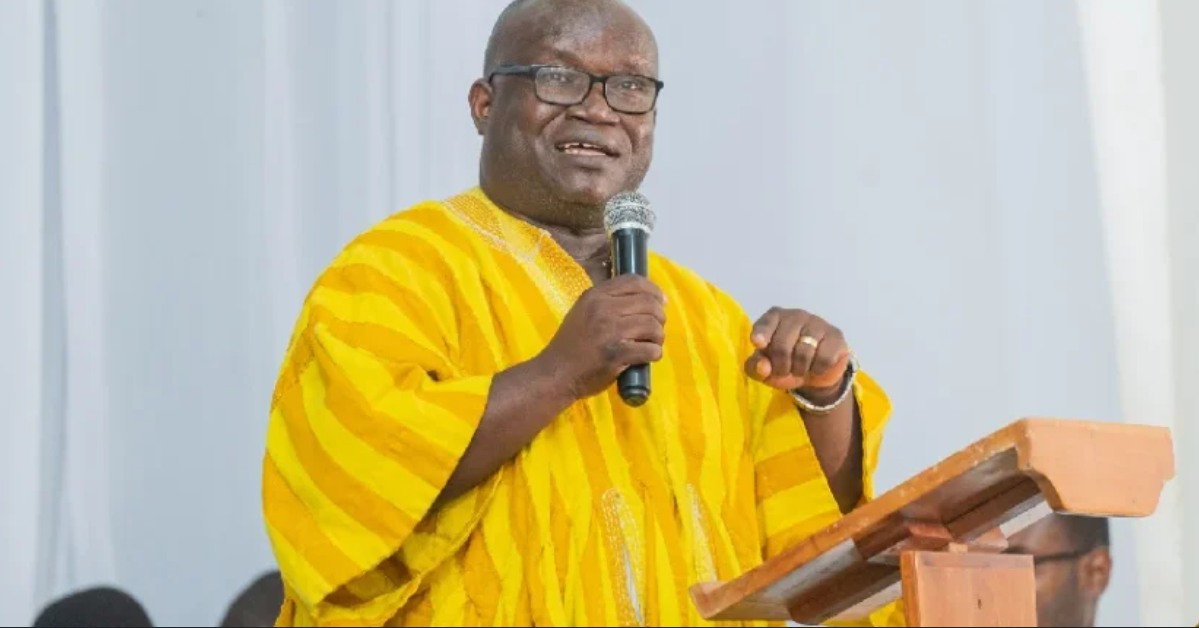
Photo credit: MyJoyOnline
The Ghana Chamber of Mines has disputed claims by GoldBod CEO Sammy Gyamfi that large-scale mining companies repatriate less than 20% of their mineral export proceeds to Ghana. Gyamfi stated these companies sold only about 10% of their output and retain substantial proceeds abroad. The Chamber described his figure as "materially misleading," contrasting it with the foreign exchange contribution of artisanal mining.
Source
MyJoyOnline
#["Business"#"HP Business 1"#"Mining"#"Gold"#"Goldbod"#"Ken Ashigbey"#"Sammy Gyamfi"]