Dr AK Mensah Dr Albert Kobina Mensah is a Research Scientist at the Council for Scientific and Industrial Research Soil Research Institute in Kumasi. He is also an Adjunct Lecturer at the University of Mines and Technology, Tarkwa. His work focuses on soil pollution, environmental risk assessment, and sustainable land restoration, particularly in areas affected by mining activities. Dr. Mensah specializes in phytoremediation – a specialisation in the use of plants to remove or stabilize contaminants in soil, as well as revegetation strategies for degraded lands. He has contributed to several scientific studies on heavy metal contamination and soil recovery techniques in Ghana and elsewhere. He is the author of the book Soil Pollution and Remediation: Risk Assessment, Phytoremediation, Revegetation (2025), which provides a comprehensive analysis of soil contamination and practical remediation approaches, combining field research with applied environmental science. Through his research and publications, Dr. Mensah has been contributing to advancing sustainable soil management and environmental protection in Ghana and beyond. In this Q & A, he speaks about his life and works. Can you tell us about your background growing up? I grew up in Prestea, a mining town in the Western Region of Ghana. Growing up in a community shaped by gold mining gave me an early, firsthand exposure to the environmental and social realities of resource extraction — the dust, the degraded lands, the polluted water bodies. Those childhood experiences planted a seed of curiosity and concern that would eventually define my entire career. Long before I could articulate concepts like ‘heavy metal contamination’ or ‘phytoremediation,’ I was already living in the shadow of mining’s consequences. That context never left me, and in many ways, everything I do professionally is a response to what I witnessed growing up in Prestea. Take us through your educational background — your high school, university education, positions held, and awards. My educational journey began right in my hometown. I attended Prestea Senior Secondary Technical School, where I completed my Senior Secondary School Certificate in 2004 — and I am proud to say I graduated as the Best Graduating Student of my year. That recognition affirmed something in me early: that excellence was achievable regardless of where you came from. I then proceeded to the University of Cape Coast, where I pursued a Bachelor of Science in Agricultural Science, graduating in May 2011. During my national service year (2011–2012), I remained at the University of Cape Coast’s Department of Soil Science, where I organized tutorials, assisted with lectures, and guided undergraduate students in their dissertations. My undergraduate thesis — ‘Can revegetation restore fertility of degraded mined soils? A Review’ — was already pointing toward the research direction that would define my career. I subsequently pursued a Master of Science in Water Resources and Watershed Management at Kenyatta University in Nairobi, Kenya (2013–2016), funded by a DAAD In-Region Scholarship. My MSc thesis examined the effects of Eucalyptus plantations on soil physico-chemical properties in a Kenyan sub-catchment. The pinnacle of my formal education came when I was awarded a DAAD–Government of Ghana joint research scholarship for doctoral training at Ruhr-Universität Bochum in Germany. Before beginning the PhD, I completed an intensive German language programme at the Carl Duisberg Centre in Cologne (April–September 2017). I then pursued my PhD in Natural Sciences at the Department of Soil Science and Soil Ecology, Ruhr-Universität Bochum, from October 2017 to December 2021, successfully defending my dissertation on ‘Arsenic contamination from gold mining and remediation of active and abandoned mining spoils in Ghana’ on 21 December 2021. The pinnacle of my formal education came when I was awarded a DAAD–Government of Ghana joint research scholarship for doctoral training at Ruhr-Universität Bochum in Germany. How did your educational trajectory impact or shape your career and who you are today? My educational journey was not linear — it was deliberately purposeful. Every degree, every country, every institution added a distinct layer to my professional identity. My BSc grounded me in agricultural and soil science fundamentals within the Ghanaian context. My MSc in Kenya introduced me to watershed management and broadened my environmental science lens across the African continent. My PhD in Germany gave me world-class laboratory training, rigorous scientific methodology, and exposure to cutting-edge research in soil redox chemistry, arsenic speciation, and phytoremediation. But beyond the technical training, studying across three countries — Ghana, Kenya, and Germany — shaped me as a person. It taught me adaptability, cross-cultural communication, and the confidence to compete at the highest levels of global science. It also deepened my conviction that African scientists must lead the charge in solving Africa’s environmental problems. I did not go abroad to stay abroad. I went to acquire the best tools available, and I came back to apply them where they are most needed. But beyond the technical training, studying across three countries — Ghana, Kenya, and Germany — shaped me as a person. It taught me adaptability, cross-cultural communication, and the confidence to compete at the highest levels of global science. Can you share more about your graduate education experiences outside of Ghana? My first international graduate experience was in Nairobi, Kenya, at Kenyatta University. The DAAD In-Region Scholarship that funded this was highly competitive, and being selected reaffirmed my academic potential. Studying in Kenya connected me to East African environmental challenges, particularly around water resources and land use. I also earned certificates in SPSS statistical analysis, Participatory GIS, and e-learning curriculum development during this period — investments in methodological competence that have served me throughout my career. My doctoral experience in Bochum, Germany, was transformative in every sense. I worked under leading scientists in soil science and soil ecology, conducting sophisticated experiments including the novel redox automated microcosm experiments to study arsenic mobilisation dynamics. I presented my work at international conferences across Italy, the United Kingdom, and the United States. I published in some of the world’s most prestigious environmental science journals — including Journal of Hazardous Materials, Environmental Pollution, and Science of the Total Environment. I also designed and taught a university course on Mining and Environmental Protection in Africa at the Institute of Geography, Ruhr-Universität Bochum — making me one of very few African doctoral researchers to independently develop and deliver a course at a German university. My doctoral experience in Bochum, Germany, was transformative in every sense. I worked under leading scientists in soil science and soil ecology, conducting sophisticated experiments including the novel redox automated microcosm experiments to study arsenic mobilisation dynamics. Following my PhD, I briefly continued as a Postdoctoral Researcher at Ruhr-Universität Bochum (January–March 2022), during which I completed and submitted two manuscripts for publication within just three months — a testament to the productivity and discipline that my German training instilled in me. When did you finally return to Ghana and what career direction did you pursue? I returned to Ghana in November 2021, immediately after defending my PhD, and joined the Council for Scientific and Industrial Research – Soil Research Institute (CSIR-SRI) in Kumasi-Kwadaso as a Research Scientist. The decision was deliberate and values-driven. Ghana needs scientists who have been trained at the highest levels internationally and wh
world
Dr Albert Kobina Mensah: The scientist, the man and his works
Ghana Business NewsBy emmakdMon, 27 Apr 2026 · 3d ago3 views
Share:
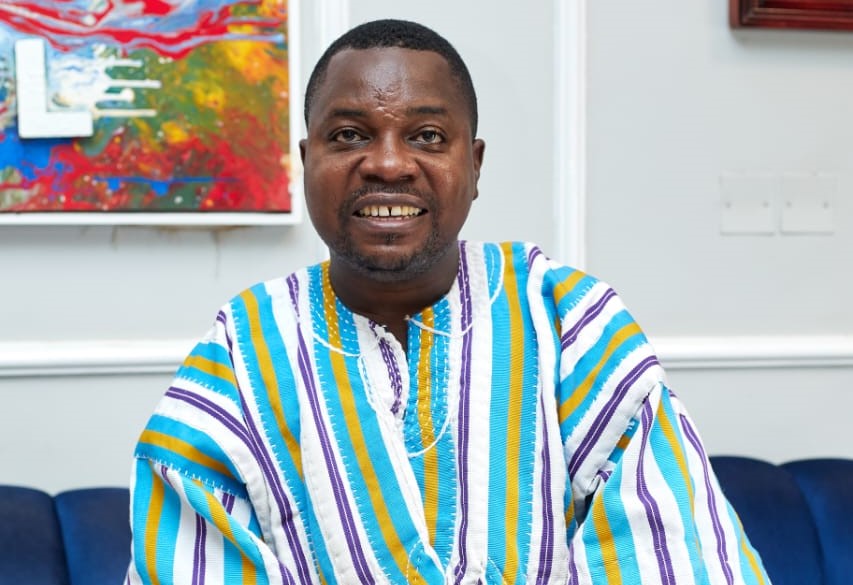
Photo credit: Ghana Business News
Dr. Albert Kobina Mensah is a Research Scientist at CSIR Soil Research Institute and an Adjunct Lecturer. His work focuses on soil pollution, environmental risk assessment, and sustainable land restoration, particularly in mining areas. He specializes in phytoremediation and revegetation strategies. Dr. Mensah has authored a book on soil pollution and remediation, contributing to sustainable soil management and environmental protection.
Source
Ghana Business News
#["Feature Articles"]