Concerns are mounting over the financial and social risks linked to Ghana’s booming sports betting industry, as reports indicate that individuals are misapplying personal and business funds for gambling activities, leading in some cases to devastating financial losses and reported fatalities. Regulatory attention has shifted toward the social and behavioural risks associated with digital gambling platforms, particularly as access becomes easier through mobile applications and fintech-linked payment systems. Small business operators and salaried workers are among those identified as vulnerable, especially where business capital and household funds are not clearly separated. Acting Gaming Commissioner, Emmanuel Siisi Quainoo, during a webinar organised by the Gaming Commission of Ghana, has highlighted the scale of gambling-related behavioural concerns, revealing that the Commission receives “at least three self-exclusion requests weekly” from individuals struggling with gaming addiction. He also recounted a distressing case involving a family dealing with a ward in police custody after the individual allegedly borrowed multiple sums from different persons to fund gambling activities, leaving the family in financial and social distress. He stressed that “addiction is very real in gaming” and can have “devastating impacts if not addressed and handled properly,” adding that self-exclusion requests “are not just data points,” but represent individuals facing real harm. According to him, such cases “remind us of the responsibility we carry,” not only as regulators and professionals, but as a wider society dealing with an evolving digital risk environment. Ghana’s current gambling regulatory framework is largely anchored on licensing requirements and an 18-year minimum age restriction enforced by the Gaming Commission. However, enforcement mechanisms have not fully adapted to the behavioural realities of online betting, where transactions are instantaneous, and exposure is continuous. READ ALSO 15-Hour Traffic Nightmare on Accra–Kumasi Corridor Strains Economic Activity NAIMOS Cracks Down on Illegal Mining at GREL Plantation, 49 Detained, Cash and Firearm Seized TUC Pushes Industrial Shift as Jobless Growth Persists in Ghana Comparative regulatory models show a shift in other jurisdictions from entry-level restrictions toward more proactive consumer protection systems. In the United Kingdom, operators are required to conduct affordability checks and monitor spending patterns to identify potential harm early, while triggering interventions when risk thresholds are met. Singapore maintains a tighter state-controlled system, including a national self-exclusion registry and strict limits on operator activity, while Sweden enforces deposit caps and mandatory loss limits to reduce excessive gambling exposure. In contrast, Ghana’s system remains largely compliance-driven at the point of registration, with limited continuous oversight once users are active on platforms. The expansion of digital gambling within Ghana’s financial ecosystem therefore, presents an ongoing policy challenge, centred on how effectively regulation can balance consumer freedom with safeguards against addiction-driven financial harm, particularly where personal and business funds intersect in high-risk betting behaviour. Share this: Share on X (Opens in new window) X Share on Facebook (Opens in new window) Facebook Like this:Like Loading... Related
technology
Sports Betting Expansion in Ghana Triggers Concerns Over Financial Abuse and Addiction
The High Street JournalBy Asamoah George OpokuSun, 3 May 2026 · 4h ago0 views
Share:
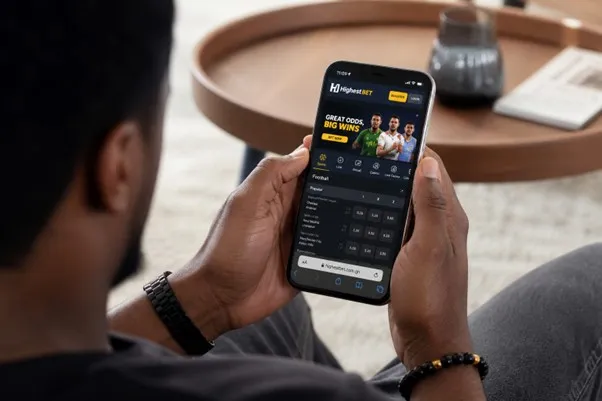
Photo credit: The High Street Journal
Ghana's booming sports betting industry is raising concerns over financial abuse and addiction. Individuals are reportedly misapplying personal and business funds for gambling, leading to financial losses and fatalities. The Gaming Commission notes increased behavioral risks from digital platforms, receiving weekly self-exclusion requests and reporting cases of severe financial distress linked to gambling addiction.
Source
The High Street Journal
#["News"#"Sports betting"#"Top Story"]