A garment manufacturing firm based in the Bono Region is calling for government support to scale up production and create thousands of jobs within a short period. Mr Michael Asare, Chief Executive Officer of McKenzie Ghana Limited, says his company has the capacity to generate up to 2,000 direct jobs within months if awarded production contracts and supported with expanded workspace. Mr Asare, who has spent over three decades in the garment industry, specialises in the production of sportswear such as physical education kits, football jerseys, athletics vests and tracksuits for schools across the country. Speaking in an interview, he explained that with the right support, the company could rapidly increase output in line with the government’s proposed 24-hour economy policy. “If government gives me a contract, within three months I can run a 24-hour production system because I will employ more people and train them,” he said. READ ALSO If The Economic Stability Does Not Lead to Increased Productivity, the BoG Loss Would Have Been in Vain Current Fertiliser Crisis Exposes Africa’s Agricultural Vulnerability, But Also a Catalyst for Change 15-Hour Traffic Nightmare on Accra–Kumasi Corridor Strains Economic Activity His appeal comes at a time when policymakers are exploring ways to use local industries to drive job creation, with the textile and garment sector identified as a key area for growth and import substitution. Mr Asare recounted how his business began with a single overlocking machine acquired on credit, despite the capital-intensive nature of garment production, which typically requires multiple specialised machines. Over the years, he has expanded operations to more than 200 machines. However, limited production space means only about 60 machines are currently in use. The factory presently employs 40 workers, including between 25 and 30 apprentices undergoing training. According to Mr Asare, the company has the capacity to produce up to 1,000 pieces of sportswear daily, depending on design complexity, and could significantly increase output if given larger contracts. He noted that the company previously supplied sports kits to senior high schools across Ghana, but operations declined following the centralisation of procurement under the Free Senior High School policy, coupled with disruptions caused by the COVID-19 pandemic. “We used to produce for almost every secondary school in Ghana, but with the changes in the system, contracts have become difficult to access, and sometimes they are outsourced abroad,” he said. Mr Asare expressed concern over the continued importation of school sportswear, insisting that local manufacturers, particularly in the Bono Region, have the capacity to meet national demand. He added that the region is home to several small and medium-scale garment producers, many of whom were trained by his company, creating a network capable of handling large-scale production if given the opportunity. “We can produce everything locally. There is no need to send contracts outside the country,” he stressed. The CEO also highlighted challenges in accessing quality raw materials, noting that most inputs are sourced from Accra and neighbouring Côte d’Ivoire, which often affects consistency and production efficiency. While commending government efforts to promote industrialisation and support the textile and garment sector, including apprenticeship initiatives, he called for more direct engagement with existing industry players. Mr Asare said his company already operates an informal apprenticeship system, providing stipends to trainees and equipping them with employable skills within a shorter training period. “Previously, it took up to three years to train someone, but now within a few weeks or a month, I can train someone to start working,” he said. He warned that without sustained support, the company’s operations could decline, affecting many individuals and families who depend on the business for their livelihoods. Mr Asare therefore appealed for government intervention, emphasising that access to contracts and expanded workspace would significantly boost production, create jobs and contribute to local economic development. “The opportunity I am asking for is contracts and space to expand. With that, we can support the 24-hour economy and contribute more to the national economy,” he said. Share this: Share on X (Opens in new window) X Share on Facebook (Opens in new window) Facebook Like this:Like Loading... Related
metro
Sunyani Garment Firm Seeks Government Contracts To Create 2,000 Jobs
The High Street JournalBy Stanley SenyaSun, 3 May 2026 · 2h ago0 views
Share:
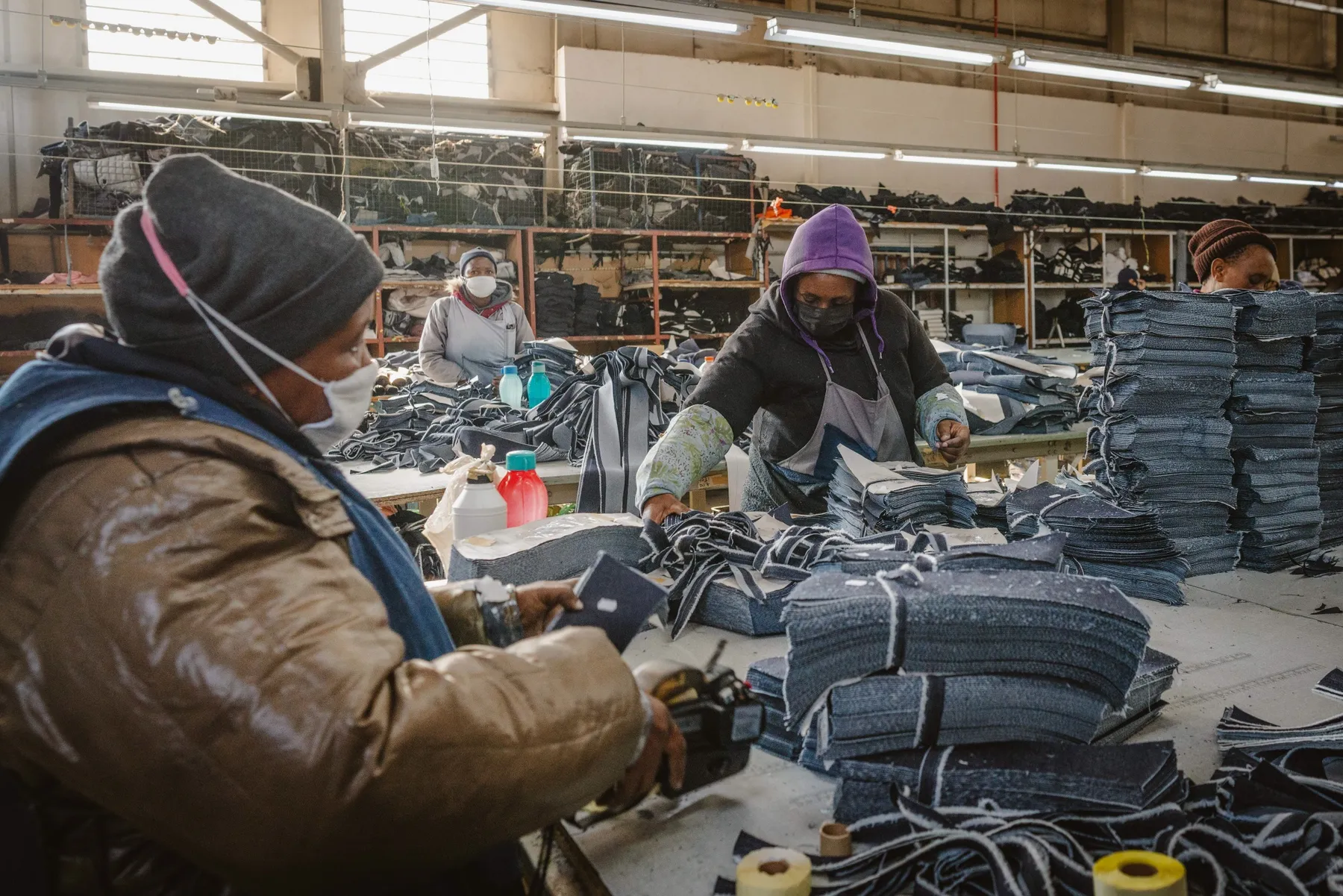
Photo credit: The High Street Journal
McKenzie Ghana Limited's CEO, Michael Asare, seeks government contracts and support to expand production. The Bono Region-based firm, specializing in sportswear, states it can create up to 2,000 direct jobs within months if provided with contracts and expanded workspace. Asare believes this support would enable a 24-hour production system, aligning with government job creation goals.
Source
The High Street Journal
#["Business & Economy"#"Africa"#"Economy"#"Garment Factory"#"Ghana Economy"#"Textile and Garment"]