Audio By Carbonatix The Executive Director of the Africa Centre for Energy Policy (ACEP), Benjamin Boakye, has attributed recent failures within Ghana’s power infrastructure to deep-seated institutional negligence, warning that recurring incidents point to systemic shortcomings rather than isolated mistakes. Speaking on Joy FM’s Top Story on Monday, April 27, Mr Boakye argued that recent incidents, including a major fire at a critical power substation, expose long-standing weaknesses in institutional culture, planning and accountability. According to him, the scale of the incident raises serious questions about engineering oversight and risk preparedness. He expressed disbelief that a facility capable of delivering over 1,000 megawatts of power to consumers could be destroyed by fire, particularly given its proximity to one of Africa’s largest hydroelectric dams. “It doesn’t take much to build systems that avert such incidents,” he said, stressing that basic fire prevention mechanisms—such as detectors, water suppression systems and surveillance technology—should have been standard in such critical infrastructure. Mr Boakye emphasised that engineers, managers and technicians operating in high-risk environments must anticipate potential hazards, including fires, and proactively implement safeguards. He described the failure to do so as evidence of “deep systemic negligence” embedded within public institutions. He further called for a thorough and transparent investigation into the incident, urging authorities to go beyond surface-level findings and hold accountable those whose inaction or oversight may have contributed to the disaster. “We cannot allow these incidents to become routine headlines that we soon forget,” he cautioned. The energy policy expert also criticised what he described as misplaced investment priorities within the sector. Citing developments in Kumasi, he argued that billions of dollars have been spent on pipelines and power plants that have failed to resolve persistent electricity supply challenges. Instead, he advocated for a more strategic approach focused on addressing core structural issues within the national grid. He pointed to the need for a robust transmission backbone—specifically a 330kV line from Pokuase to Anwomaso—as a more effective solution to stabilise power supply in key regions. Mr Boakye lamented that such recommendations had previously been overlooked in favour of large-scale projects that, in his view, have delivered limited value to consumers. “We keep pumping billions into the power sector without delivering optimal solutions,” he said. He also questioned the credibility of some public claims regarding infrastructure upgrades, noting that even the Public Utilities Regulatory Commission (PURC) had, at one point, cast doubt on reported installations by the Electricity Company of Ghana (ECG). The broader consequence, he argued, is a cycle of inefficiency that leaves consumers grappling with unreliable power supply—commonly referred to as “dumsor”—despite substantial financial investments in the sector. “For the average Ghanaian, all they want is to switch on the light and have it work,” he noted. “But for over a decade, we’ve been having the same conversations about when power will stabilise.” Mr Boakye called for a fundamental reset in how Ghana approaches energy sector planning and investment. He urged policymakers to identify and prioritise critical infrastructure needs, ensure accountability at all levels, and adopt practical, common-sense solutions to prevent future failures. DISCLAIMER: The Views, Comments, Opinions, Contributions and Statements made by Readers and Contributors on this platform do not necessarily represent the views or policy of Multimedia Group Limited. Tags: ACEP Benjamin Boakye DISCLAIMER: The Views, Comments, Opinions, Contributions and Statements made by Readers and Contributors on this platform do not necessarily represent the views or policy of Multimedia Group Limited. Related to this story ACEP warns of deep negligence in power sector after Akosombo fire incident Ghana’s power sector needs systemic fix, not just leadership changes – ACEP Fuel price cuts won’t translate instantly – ACEP boss explains why Fuel Price Hikes: ACEP calls for stronger support for private fuel storage to safeguard supply ACEP urges suspension of some petroleum levies amid fuel price hikes ACEP urges incentives for private fuel storage as prices surge in Ghana ACEP reiterates opposition to fuel price floors amid OMC price wars ACEP hosts Guinea delegation for three-day peer learning exchange on civil society advocacy TOR restart could influence pump prices depending on refinery’s crude sourcing- ACEP Achieving science, technology and innovation adoption targets set out in 2026 budget for Ghana Latest Stories Systemic negligence in power sector must be addressed – Ben Boakye warns10 minutes GTEC withdraws retirement age, post-retirement contract directive following ministerial order19 minutes We’re working to keep the lights on – Energy Ministry assures full restoration38 minutes ACEP warns of deep negligence in power sector after Akosombo fire incident40 minutes Ghana’s power sector needs systemic fix, not just leadership changes – ACEP43 minutes Over 2,000 residents in Bole District connected to rural telephony network52 minutes Hayford Addai clinches second gold at Rabat Grand Prix ahead of Commonwealth Games1 hour Kwesi Slay teases new music in behind-the-scenes Instagram posts1 hour 10 dead as military escort convoy comes under bloody attack at Binduri1 hour Ghanaian VR developer Edmund Darko gains recognition for preserving culture through immersive technology2 hours Over 2,000 residents connected to rural telephony network in Bole District2 hours ‘I used to sell kerosene’ – Dr Adutwum reflects on childhood hustle2 hours A new chapter for Africa’s malaria response through accountability and sovereignty3 hours For every generation, vaccines work — Securing Africa’s health future3 hours I started farming at a young age – Dr Osei Adutwum reveals3 hours
technology
Systemic negligence in power sector must be addressed – Ben Boakye warns
MyJoyOnlineBy Emmanuel TettehMon, 27 Apr 2026 · 2h ago0 views
Share:
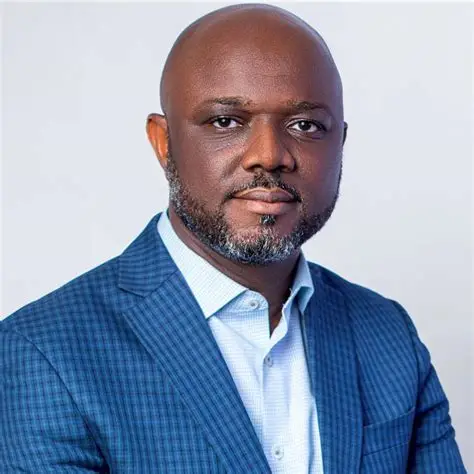
Photo credit: MyJoyOnline
Benjamin Boakye, Executive Director of ACEP, warned that recent failures in Ghana's power infrastructure, including a major substation fire, stem from systemic negligence. Speaking on Joy FM, he attributed incidents to deep-seated institutional shortcomings in planning, accountability, and engineering oversight. Boakye emphasized the need for basic prevention systems in critical infrastructure and called for thorough investigation into what he termed "deep systemic negligence."
Source
MyJoyOnline
#["National"#"ACEP"#"Benjamin Boakye"]