Prof. Michael Kpessa-Whyte Audio By Carbonatix In recent times, under the leadership of President John Mahama, Ghana has recorded discernible and, in some respects, commendable improvements in the quality of governance. Public financial management systems are becoming more disciplined and transparent, procurement frameworks are being tightened to curb leakages, and performance monitoring across state-owned enterprises is increasingly yielding measurable and verifiable outcomes. These are not merely procedural adjustments; they signal a broader institutional effort to align state activity with principles of accountability, efficiency, and value for money. Yet, paradoxically, even as these gains take shape, segments of Civil Society Organisations (CSOs) have responded with sustained, and in some instances intensified, criticism. Concerns have been raised about procurement integrity, allegations of hidden patronage networks have been made, and warnings have been issued about creeping state overreach. While civil society interventions are often legitimate vigilance, upon closer scrutiny, the recent posturing by some within the Ghanaian civil society community reveals partial readings, misreadings, technical misunderstandings, or overstated claims. The central issue, therefore, is not the existence of critique; indeed, critique is indispensable to any functioning democracy, but the pattern it assumes, which suggests an ambivalent posture marked by persistent scepticism and occasional exaggeration, even in the face of credible and demonstrable improvements in governance outcomes. This scenario captures a central paradox in contemporary African governance, especially the uneasy and often ambivalent relationship between good governance and civil society organisations. While CSOs are widely recognised as indispensable actors in deepening democracy, enhancing accountability, and amplifying citizen voice, their role is neither uniformly constructive nor consistently aligned with the broader public interest. In contexts where governance is visibly deficient, their relevance is clear and their interventions often indispensable. However, when governance systems begin to function with relative effectiveness, such as when transparency improves, institutions strengthen, and public officials adhere more closely to rules, the posture of some CSOs becomes more complex and, at times, inherently contradictory. To understand this ambivalence, it is necessary to revisit the theoretical foundations of civil society. Classical thinkers such as Alexis de Tocqueville viewed civil associations as organic expressions of citizen initiative, arising spontaneously to defend shared interests and reinforce democratic norms. Similarly, Antonio Gramsci conceptualised civil society as a terrain of ideological contestation, where social forces shape and challenge state power. In both traditions, civil society is rooted in autonomous citizen agency and a normative commitment to the public good. By contrast, much of Africa’s “third wave” civil society emerged under different historical and structural conditions. Most of them are inorganic and artificial in form and substance. The liberalisation processes of the 1980s and 1990s, driven by external actors and donor institutions, catalysed the proliferation of CSOs across the continent. While this expansion undeniably broadened civic space and enhanced participatory governance, it also introduced new dynamics. Many organisations became heavily reliant on donor funding, project-based interventions, and advocacy models that prioritised visibility and critique as pathways to relevance and sustainability. In such an ecosystem, dissent is not only a democratic function but, at times, an operational necessity to remain relevant. At its most illustrative, the risk that good governance poses to civil society relevance can be likened to a fire service in a city that has finally mastered fire prevention. When fires are frequent and destructive, the fire service is indispensable, visible, and unquestionably valued. But when building codes improve, enforcement becomes stricter, and fires become rare, the very success of prevention creates an existential dilemma: the fire service must either redefine its role toward prevention and resilience or risk justifying its continued prominence by amplifying minor incidents into major alarms. In a similar vein, when governments perform well by reducing corruption, improving service delivery, and strengthening institutions, some CSOs face a subtle yet powerful pressure to sustain their relevance in a shrinking space amid crisis. This pressure can, in certain instances, incentivise overstatement, selective framing, or the elevation of technical irregularities into systemic failures, thereby blurring the line between necessary vigilance and self-preserving exaggeration. This structural reality helps explain why ambivalence may surface even under conditions of sound governance. First, there is the issue of institutional survival. CSOs, like all organisations, must justify their existence. In environments where government failures are glaring, this justification is straightforward: they expose corruption, advocate for reform, and mobilise public pressure. However, when governance improves, the space for dramatic intervention narrows. The incentive, therefore, may shift toward what can be described as “issue amplification”—highlighting marginal concerns, framing technical decisions as systemic failures, or, in more problematic cases, engaging in what critics term “scandal construction” to sustain public attention. Second, political positioning plays a significant role. Civil society in Africa does not operate in a vacuum; it is embedded within broader political economies. Some organisations maintain explicit or implicit alignments with political actors, ideological camps, or interest groups. In such cases, their responses to governance outcomes may be filtered through partisan lenses. Even well-intentioned advocacy can become entangled in political contestation, leading to selective scrutiny or disproportionate critique that undermines the perception of neutrality. Third, epistemic and technical gaps can contribute to ambivalence. Modern governance increasingly involves complex policy instruments, including financial regulations, procurement frameworks, performance contracts, and sector-specific reforms that require specialised expertise to interpret accurately. When CSOs engage these issues without sufficient technical grounding, misinterpretations can arise. For instance, policies designed to enhance efficiency within state-owned enterprises may be misconstrued as market distortions, or routine administrative errors may be framed as deliberate malfeasance. In such instances, the line between legitimate oversight and misguided critique becomes blurred. The implications of this ambivalence are profound. On one hand, a vigilant and assertive civil society is essential for preventing complacency within government. Even well-performing administrations benefit from scrutiny, as it reinforces accountability and deters backsliding. On the other hand, persistent scepticism that disregards evidence of progress can erode public trust, not only in government but in the very institutions of accountability. When citizens are repeatedly confronted with allegations of wrongdoing that later prove exaggerated or unfounded, they can become weary and less responsive. This is a condition that may be described as “accountability fatigue.” Over time, this weakens public trust in civil society and reduces the impact of genuine watchdog efforts. In addition, ambivalence within civil society can distort democratic discourse. Rather than promoting constructive engagement, in which CSOs work with state institutions to refine policies, offer informed feedback, and help shape solutions, the relationship can shift toward persistent confrontation an
politics
The ambivalence of civil society in an era of good governance
MyJoyOnlineBy Abubakar IbrahimFri, 24 Apr 2026 · 3h ago0 views
Share:
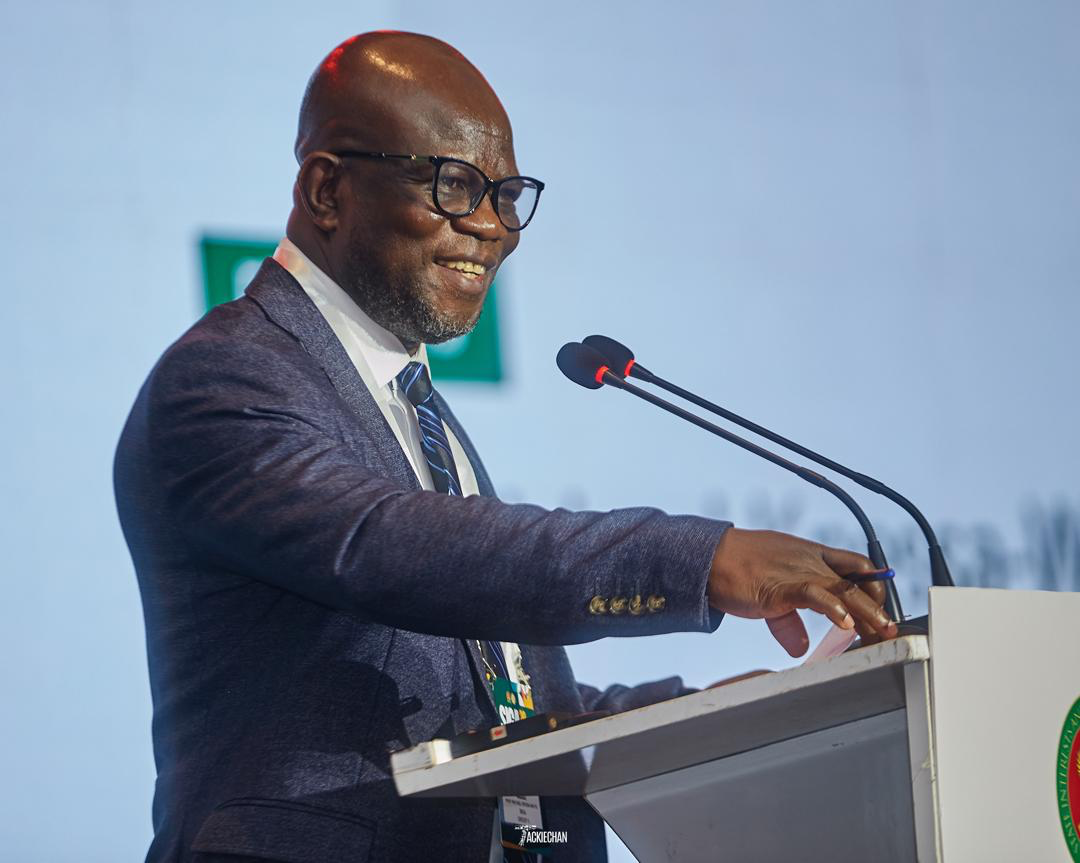
Photo credit: MyJoyOnline
Under President John Mahama, Ghana has seen improvements in governance, including public financial management and procurement. Despite these gains, Civil Society Organizations (CSOs) have maintained criticism, citing concerns about procurement integrity and patronage. The article suggests some CSO critiques may stem from partial readings or misunderstandings, highlighting an ambivalent posture towards governance improvements.
Source
MyJoyOnline
#["Opinion"#"Civil Society Organisations (CSOs)"#"Good Governance"#"Prof. Michael Kpessa-Whyte"#"SIGA"]