Delays in road construction projects across urban communities are increasingly translating into measurable economic losses for households and small businesses, as unpaved roads generate persistent dust pollution, reduce trading activity, and increase both medical and transport-related spending. In communities affected by prolonged construction delays, small-scale traders are among the most economically exposed. Evidence from urban informal economy studies in Sub-Saharan Africa shows that street vendors can lose between 20% and 50% of their daily income during periods of environmental and infrastructural disruption, such as dust pollution, road closures, and restricted access to trading spaces. These disruptions reduce customer flow and limit physical access to trading locations, directly affecting daily sales. For many households that rely on daily earnings, such income losses quickly translate into reduced spending on food, education expenses, and savings capacity. Transport operators also report rising operational costs as vehicles deteriorate faster on unpaved or partially completed roads. Poor road surfaces increase fuel consumption and maintenance frequency, affecting profitability and forcing drivers to adjust their operations. In many cases, operators respond by shortening routes and breaking longer journeys into segments, effectively increasing the total cost paid by passengers traveling longer distances. This restructuring of transport services indirectly raises the cost of moving goods and people, which feeds into higher prices for goods and services and reduces disposable income within affected communities. READ ALSO Ecobank Executive Highlights Skills Shift as UPSA Opens 2026 Practitioner’s Forum CalBank Profits Surge Over 100% to GHS 102 Million in Q1 2026, Doubling Last Year’s Performance Ministry of Finance Moves to Sanction Institutional Heads Over Reporting Breaches Health-related expenditure adds another significant layer of financial pressure. Households exposed to continuous dust report repeated spending on medication, clinic visits, and treatment for respiratory conditions. According to the World Bank, air pollution contributes to trillions of dollars in global welfare losses annually, largely driven by healthcare spending and lost productivity. In low- and middle-income settings, where most healthcare costs are paid out-of-pocket, this translates into direct monthly financial strain for households already facing unstable incomes. A development economics framing of this burden describes air pollution as a “hidden economic cost that reduces household welfare through simultaneous income loss and increased unavoidable health expenditure,” particularly in urban informal settlements. Global health and economic data reinforce the scale of the broader burden. The World Health Organization (WHO) and the Institute for Health Metrics and Evaluation (IHME) estimate that air pollution is responsible for approximately 7 million premature deaths annually, with some integrated estimates placing the figure as high as 7.9 million deaths per year when both indoor and outdoor exposure are considered. The Clean Air Fund emphasizes the systemic nature of the problem, stating that “air pollution is now one of the leading risk factors for premature death globally, affecting populations across all income levels and regions.” This underscores the fact that the economic consequences of exposure are not limited to health outcomes but extend into productivity loss and reduced economic participation. Environmental health research also supports the link between construction-related dust and disease burden. Peer-reviewed studies on urban air pollution indicate that “continuous exposure to road dust from construction activities significantly contributes to respiratory illness in urban populations living near unsealed roads,” further reinforcing the cost burden placed on households through repeated healthcare spending. Urban planners argue that these economic and health costs are largely avoidable. When road projects are delayed without proper dust control measures such as regular watering, temporary surfacing, and traffic diversion, surrounding communities effectively absorb the cost of incomplete infrastructure through reduced income, higher living expenses, and increased medical spending. As cities continue to expand, the challenge is increasingly economic as much as infrastructural: ensuring that road development does not impose recurring financial losses on the very communities it is intended to benefit. Delayed road construction continues to place a financial burden on affected communities. Timely completion and effective dust control are key to easing the financial burden on communities. Share this: Share on X (Opens in new window) X Share on Facebook (Opens in new window) Facebook Like this:Like Loading... Related
business
Delayed Road Construction Drives Up Costs For Households And Businesses
The High Street JournalBy Asamoah George OpokuSun, 19 Apr 2026 · 1h ago1 views
Share:
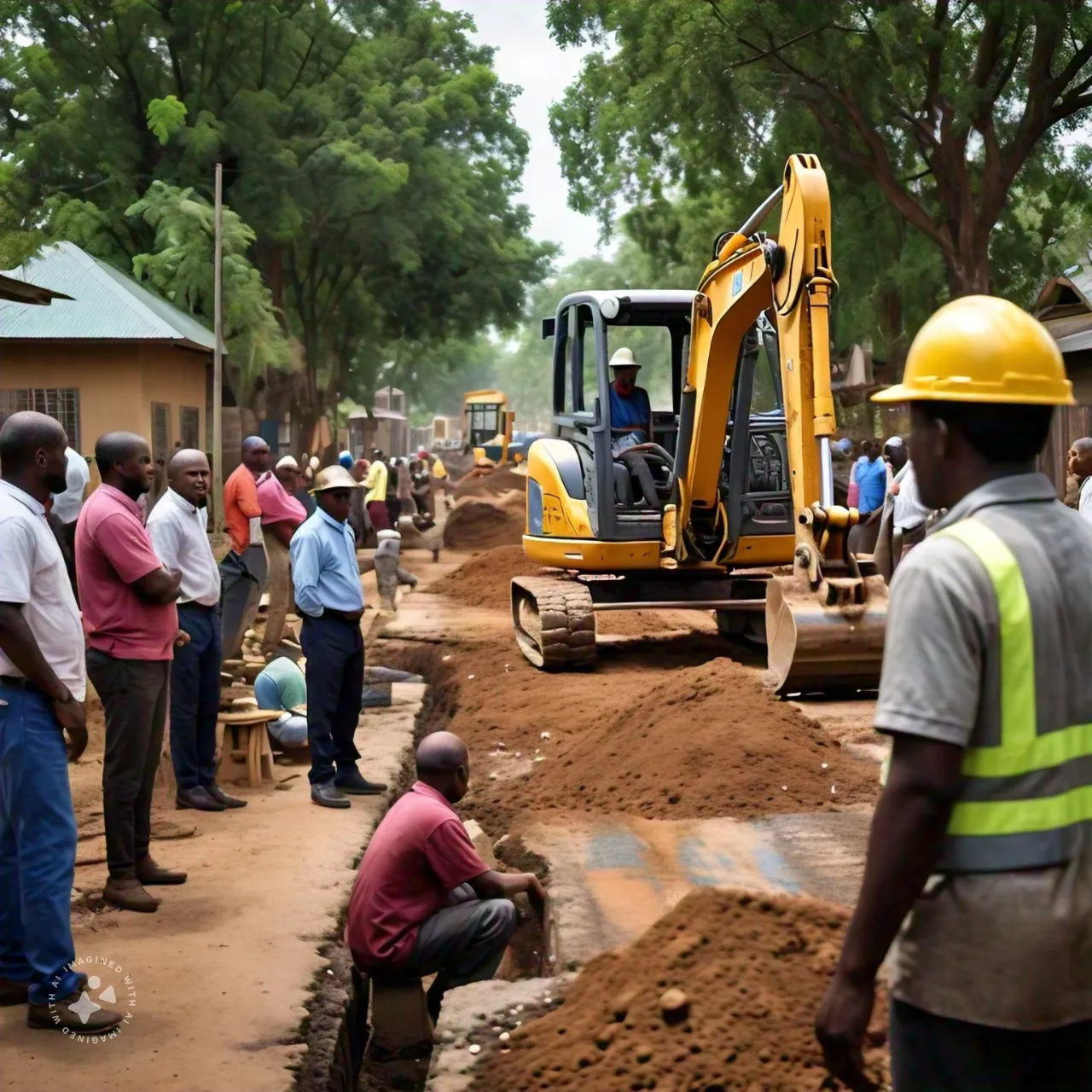
Photo credit: The High Street Journal
Delayed road construction projects are causing economic losses for households and small businesses. Unpaved roads generate dust pollution, reduce trading activity, and increase medical and transport-related spending. Street vendors can lose 20-50% of daily income due to disruptions, while transport operators face higher costs from vehicle deterioration and increased fuel consumption.
Source
The High Street Journal
#["Business & Economy"#"Road Construction"#"Sub-Saharan Africa"#"Top Story"]