Image of containers at the port Audio By Carbonatix The Importers and Exporters Association of Ghana (IEAG) has declared a victory for the domestic trading community, throwing its "full support" behind the Ghana Shippers’ Authority (GSA) directive to slash and cap Container Administrative Charges (CAC) at the nation’s ports. In a statement released on Tuesday, 21st April 2026, IEAG described the regulatory intervention as “timely and long overdue", ending decades of what it terms "unjustified" financial bleeding by international shipping lines. The new directive, which caps the charge at GH₵550 per Twenty-Foot Equivalent Unit (TEU), is set to take effect on May 1, 2026. The IEAG’s endorsement highlights a systemic grievance: the claim that shipping lines have been forcing Ghanaian businesses to “pay twice for the same service". According to the IEAG, legitimate costs—such as port dues and terminal handling—are already baked into the freight rates paid by shippers. The additional administrative charge is, therefore, viewed as a redundant cost recovery mechanism. “Ghanaian businesses have, for years, been burdened by excessive, opaque and unjustified charges imposed by international shipping lines and their local agents,” the IEAG asserted. These practices, the group noted, have not only inflated the cost of doing business but have fundamentally “weakened Ghana’s competitiveness as a regional trade hub". The scale of the financial impact is staggering. IEAG estimates reveal that in 2024 alone, Ghanaian traders were slapped with approximately GH₵1.69 billion (roughly $108 million) in Container Administrative Charges. The Association pointed out a disturbing regional disparity that suggests Ghana has become an outlier in West African trade costs. While neighbouring competitors like Togo, Benin, Côte d’Ivoire, and Nigeria maintain charges between $30 and $68 per container, fees in Ghana have ballooned to as high as $165 per TEU. The Association provided historical context to the charge, explaining that the CAC was a temporary measure introduced in the 1980s when Ghana’s port infrastructure was primitive. Today, with the multi-million dollar automation and modernisation of the Tema and Takoradi ports, the IEAG argues the original rationale for the fee has vanished. The group also took a hardline stance against reports of shipping line employees threatening industrial action or resistance to the new cap. “Attempts to resist or undermine this reform through threats or pressure tactics will not succeed,” the statement concluded, dismissing such threats as a desperate effort to protect foreign exchange outflows that see revenues from freight and demurrage repatriated abroad with “minimal direct benefit to Ghana’s economy.” The IEAG has framed the GSA’s decision to cap the fee at GH₵550 as a “balanced intervention”—one that allows for operational flexibility while shielding the Ghanaian consumer from the inflationary pressures of high import costs. As the May 1st deadline approaches, the Association is calling for total compliance from all stakeholders, signalling that the era of "unchecked" charges is officially over. The spotlight now shifts to the international shipping lines to see if they will fall in line with the new price ceiling or face further regulatory sanctions in Ghana’s increasingly assertive maritime sector. DISCLAIMER: The Views, Comments, Opinions, Contributions and Statements made by Readers and Contributors on this platform do not necessarily represent the views or policy of Multimedia Group Limited. Tags: Container Export Import DISCLAIMER: The Views, Comments, Opinions, Contributions and Statements made by Readers and Contributors on this platform do not necessarily represent the views or policy of Multimedia Group Limited. Related to this story GUTA warns of cost burden from Publican AI system Ghana’s export earnings in 2025 dominated by UAE, India and Switzerland – GSS BoG Governor sees opportunity in Burkina Faso tomato export ban Ghana’s export earnings hit $6.2bn in first two months of 2026 Nigeria extends shea-nut export ban to boost domestic processing Gov’t to purchase 3 tonnes of gold weekly in push for 15-month import cover – Ato Forson Outrage as South Korean official suggests ‘importing’ foreign women to boost birth rate Enforce local cargo insurance policy on commercial imports from Feb.1 – Finance Ministry charges BoG, GRA Nana Oye urges structured diaspora engagement as Ghana pushes 24-hour economy, export-led growth Agric Minister raises alarm over soaring import bill and historic food inflation Latest Stories Importers and exporters back GSA’s cap on container charges5 minutes OSP right to seek Supreme Court order to quash High Court’s decision – Tampuli Sulemana6 minutes Asiedu Nketia defends ‘One Man, One Position’ policy as a fairness measure8 minutes 10th Ghana CEO Summit and Expo launched to drive bold economic reforms11 minutes We were told authoritatively there were plans to poison me in prison – Tsatsu Tsikata alleges13 minutes Dr Bawumia confers with EU Ambassadors in Accra31 minutes Cylinder project still active—GCMC assures39 minutes “Give Me My Tithe and Let Me Go”: A Quiet Uprising in the House of Order41 minutes Police rescue abducted girl from Agormanya; suspect arrested47 minutes OSP was born as a ‘political tool’ for NPP – Edudzi Tameklo58 minutes NDC will deliver on Upper West development promises – Asiedu Nketia60 minutes Asiedu Nketia credits internal reconciliation strategy for NDC gains in Upper West1 hour Ghana, Lesotho deepen procurement cooperation through study visit1 hour The last refuge: Saving the Tano’s sacred crocodile2 hours Energy committee urges finance ministry to expedite financial clearance for GCMC expansion2 hours
business
Importers and exporters back GSA’s cap on container charges
MyJoyOnlineBy David ApingaTue, 21 Apr 2026 · 1h ago1 views
Share:
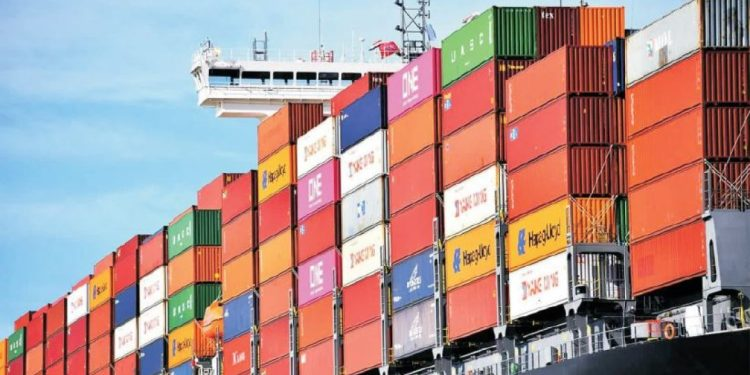
Photo credit: MyJoyOnline
The Importers and Exporters Association of Ghana (IEAG) supports the Ghana Shippers’ Authority's (GSA) directive to cap Container Administrative Charges (CAC) at GH₵550 per Twenty-Foot Equivalent Unit (TEU). Effective May 1, 2026, this intervention aims to address what the IEAG calls "unjustified" charges by international shipping lines, which they claim duplicate costs already covered in freight rates.
Source
MyJoyOnline
#["Business"#"News"#"Container"#"Export"#"Import"]